Page three of the Town of Paradise Valley's adopted budget for fiscal year 2026/27 is an Arizona Auditor General form, and one line on it explains a great deal about the town. For fiscal 2026, the amount subject to the state expenditure limit is $46,901,569. On the next line, the limit itself is $46,901,569. The two figures are identical.
On the same page, the Town shows $34,557,974 "maintained for future financial stability" and another $5,000,000 set aside for future retirement contributions. Paradise Valley has the money. What it ran short of was legal permission to spend it. That gap is what voters were asked about on November 3, and it explains how a town without a property tax actually pays for its streets, sewers and police.
The Money Comes From Commerce and Visitors
The fiscal 2026/27 budget, adopted May 14, 2026, puts it plainly: "The city/town does not levy property taxes and does not have special assessment districts for which property taxes are levied." That statement covers the Town's own levy. Instead, the General Fund runs on the sources below, as estimated for fiscal 2026/27:
General Fund source, FY 2026/27 estimate | Amount | Share of General Fund |
|---|---|---|
Transaction privilege tax | $37,678,398 | about 71% |
State-shared revenue | $5,367,047 | about 10% |
Permit and planning fees | $3,301,860 | about 6% |
Fines and forfeitures | $2,354,100 | about 4% |
Investment earnings | $1,973,567 | about 4% |
Franchise fees | $1,502,349 | about 3% |
Charges for services, rents and leases, other | $787,600 | about 1% |
Total General Fund | $52,964,921 |
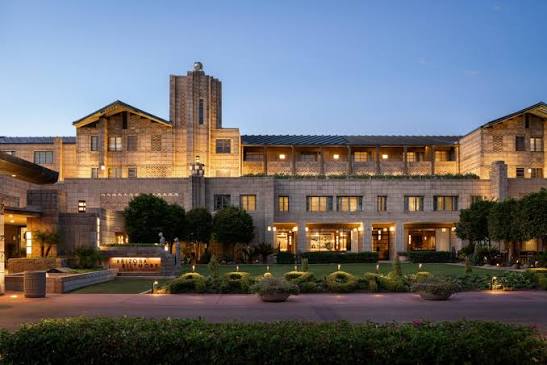
Transaction privilege tax is the base of this table, and in Paradise Valley a large share of it comes from hospitality. When The Ritz-Carlton was being planned, a 2022 councilmember Q&A said the resort was expected to bring in more Town revenue than it cost, mostly through occupancy taxes. The same Q&A expected the larger projects on the east side of town to raise public-safety costs and traffic. Both expectations matter here, because one feeds the revenue line and the other feeds the spending line.
A Formula That Counts Residents in a Town Built Around Visitors
Arizona voters amended the state constitution in 1980 to cap what every city, county and town may spend each year, however much revenue it collects. The base is each municipality's spending in fiscal 1979/80. Each year, the State Economic Estimates Commission adjusts that base for population and inflation. Revenue is not capped. Only spending is.
The population adjustment fits Paradise Valley poorly. In the official publicity pamphlet, the Town says its population barely grows while its costs come from things the formula ignores:
- Residential construction and reconstruction across town
- Resorts that have added rooms, renovated or newly opened
- Visitors and pass-through traffic from surrounding Valley cities, which add wear to roads, sewers and stormwater systems and add demand on public safety
- Residents whose primary home is elsewhere, who are not counted in the Census but still use Town services
- Pension and construction inflation, which the Town describes as two of its largest expenses and which rise faster than the general inflation rate in the formula
The 1980 base also predates much of what the Town now does. Since then it has added sewer infrastructure, fire services, alarm monitoring, convention and visitor promotion, stormwater facilities, utility-line undergrounding, more police personnel, and expanded hillside development review. Every one of those services counts against a ceiling sized for a smaller town government.
Two Budget Years With Almost No Room Left
Fiscal 2026 used the full allowance, to the dollar. For fiscal 2026/27, total budgeted spending is $68,677,354. After $20,721,000 in exclusions, $47,956,354 counts against the cap, and the cap is $48,281,082. That leaves $324,728 of headroom in a General Fund of nearly $53 million.
The cap has teeth. If the Town spends past its limit without voter approval, state law allows the state to withhold its state-shared revenue. In fiscal 2025, that revenue was $5,267,070, or 7.6% of the money the Town used for operations and infrastructure. The Town's stated fallback is to delay infrastructure projects or issue bonds. Bond proceeds do not count against the limit, but they bring interest and repayment costs. A town that collects more than it spends would end up borrowing to build.
What the Two Propositions Do
The ballot offered two separate fixes.
- Proposition 426 permanently raises the 1979/80 base by $3,940,190. State law requires the question to be written in 1980 dollars. In current dollars, the Town estimates this moves the fiscal 2027/28 limit from $51,702,050 to $71,702,050, an increase of $20 million.
- Proposition 427 creates a Capital Projects Accumulation Fund. The Council could move surplus revenue from future years into the fund, and capital spending from it would not count against the cap. Money already in the General Fund balance cannot be moved in. Only surplus earned after the fund is set up qualifies.
The Town says neither measure raises taxes or requires spending up to the cap, and the Council must still adopt a balanced budget every year. This is the fourth time the Town has asked to raise its base. Voters approved increases in 2000, 2006 and 2016, and 84 of Arizona's 92 municipalities have changed their limits at least once.
The two measures reflect a real debate on the Council about how much room to give the operating budget. In a 2025 opinion piece, councilmember Anna Thomasson questioned raising the general limit and pointed to bonds or a capital accumulation fund instead. Her argument for Proposition 427 in the pamphlet says the fund "revives a proven model from 1993" and makes the case directly:
"Over the last five years alone, thanks to our hospitality revenue, our Town generated $88 million in surplus revenue. This is more than enough to fully fund our capital projects without creating a property tax or increasing the state-mandated spending limit."
She also argued that moving the current budget's $17 million in capital improvements into the fund would free the same amount of room under the cap for regular operations. The pamphlet notes that arguments appear as submitted and were not checked for accuracy. No arguments against either measure were filed. An opinion piece in the Paradise Valley Independent reported that the Council voted 5–2 to put both measures on the ballot.
Where the Count Stood After Election Week
Both measures led from the first count. The Paradise Valley Independent reported early unofficial totals the morning after the election, and the county's summary report from November 7 shows the leads holding:
Measure | Yes | No | Yes share |
|---|---|---|---|
Prop. 426, base limit increase | 4,160 | 2,870 | 59.17% |
Prop. 427, capital projects fund | 4,431 | 2,560 | 63.38% |
Under county rules, results stay unofficial until the canvass is complete. The county will post official canvass results at Maricopa County Elections.
What This Means for a House Here
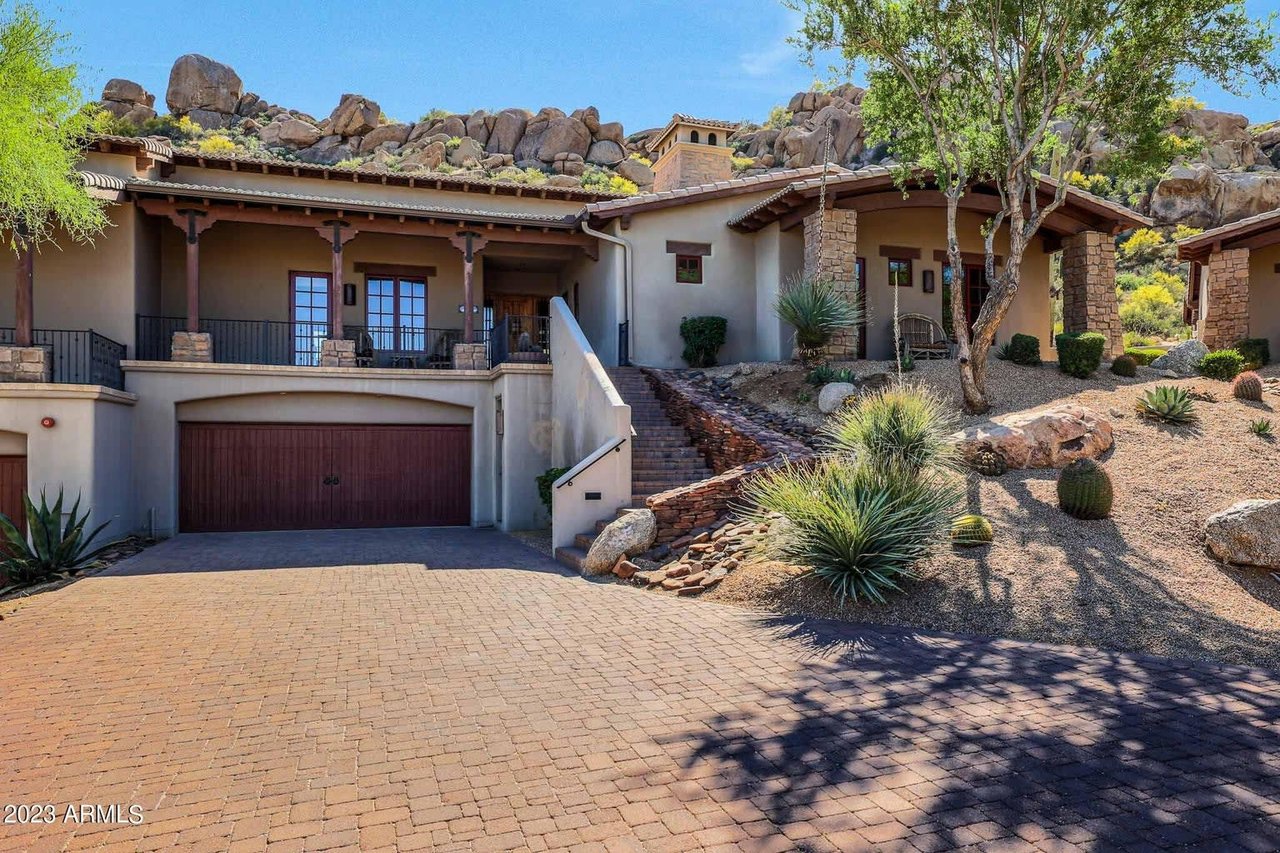
For a buyer weighing Paradise Valley against Scottsdale or the Biltmore, the familiar pitch is a town without a property tax. The budget shows what supports that. Roughly seven of every ten General Fund dollars come from transaction privilege tax, much of it from hospitality, and the services that money pays for have been limited by a formula based on a much smaller town government.
The Town's five-year Capital Improvement Program covers projects over $100,000 with a useful life of at least three years. It includes sewer repairs, drainage improvements, power-line undergrounding, street and intersection work, and police and fire buildings and equipment. Those are the projects a homeowner sees at the end of a driveway: the drainage after a monsoon storm, the overhead lines on a view lot, the condition of the street to the front gate. If both measures are certified, the Town gains more spending authority and the option to set aside future surplus for that work outside the cap. The Town had named delaying projects or issuing bonds as the alternatives if the measures failed.
This is general information, not legal, tax or financial advice. Please confirm how any tax or rule applies to your situation with a qualified professional.
A Few Quick Answers
Does approval mean new taxes? The Town says no. Its current and projected revenues exceed projected spending, and the measures change only how much it may spend.
Can the Town move its existing savings into the new capital fund? No. Only surplus earned after the fund is established can be moved into it.
Does "no property tax" describe the whole tax bill? The budget statement covers the Town's own levy and special assessment districts. Before you buy, confirm a specific parcel's full tax bill with the county and your tax advisor.
When we prepare clients for a purchase in Paradise Valley, the town's finances are part of the property conversation. They shape the streets, drainage and power lines around every lot. If you would like help understanding a specific property in that context, Merritt Estates would be glad to sit down with you. Book an Appointment.