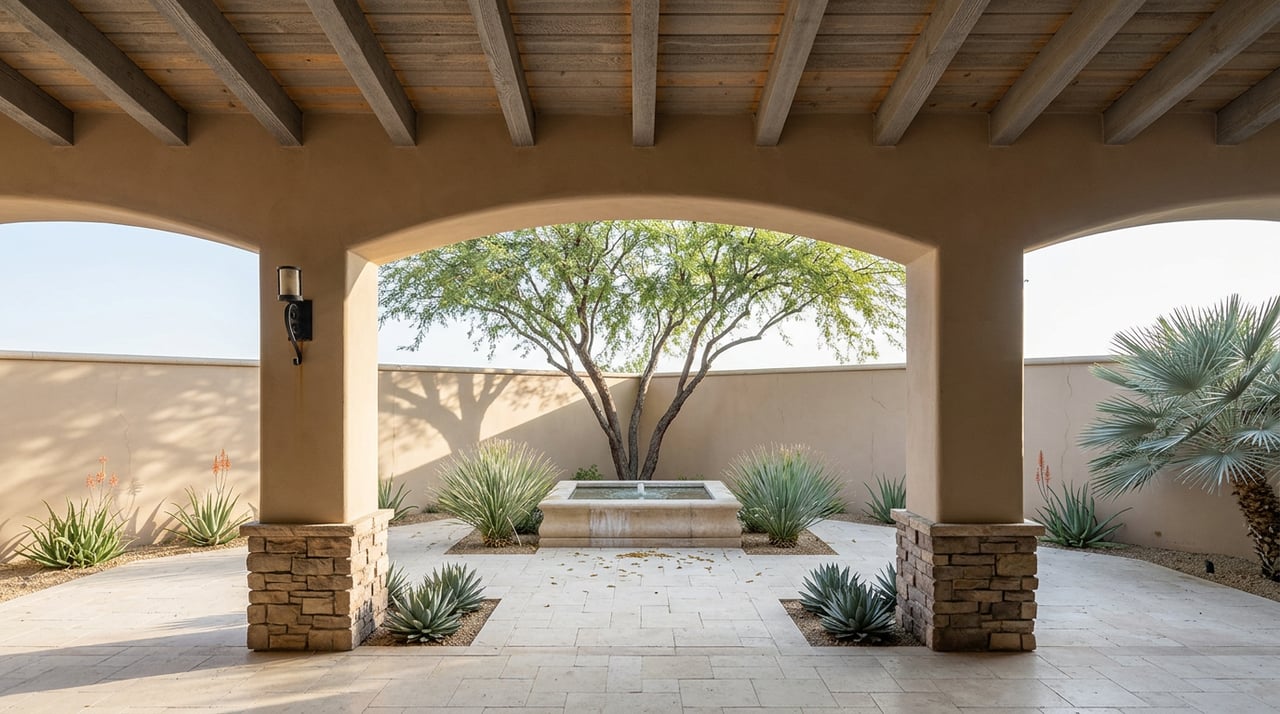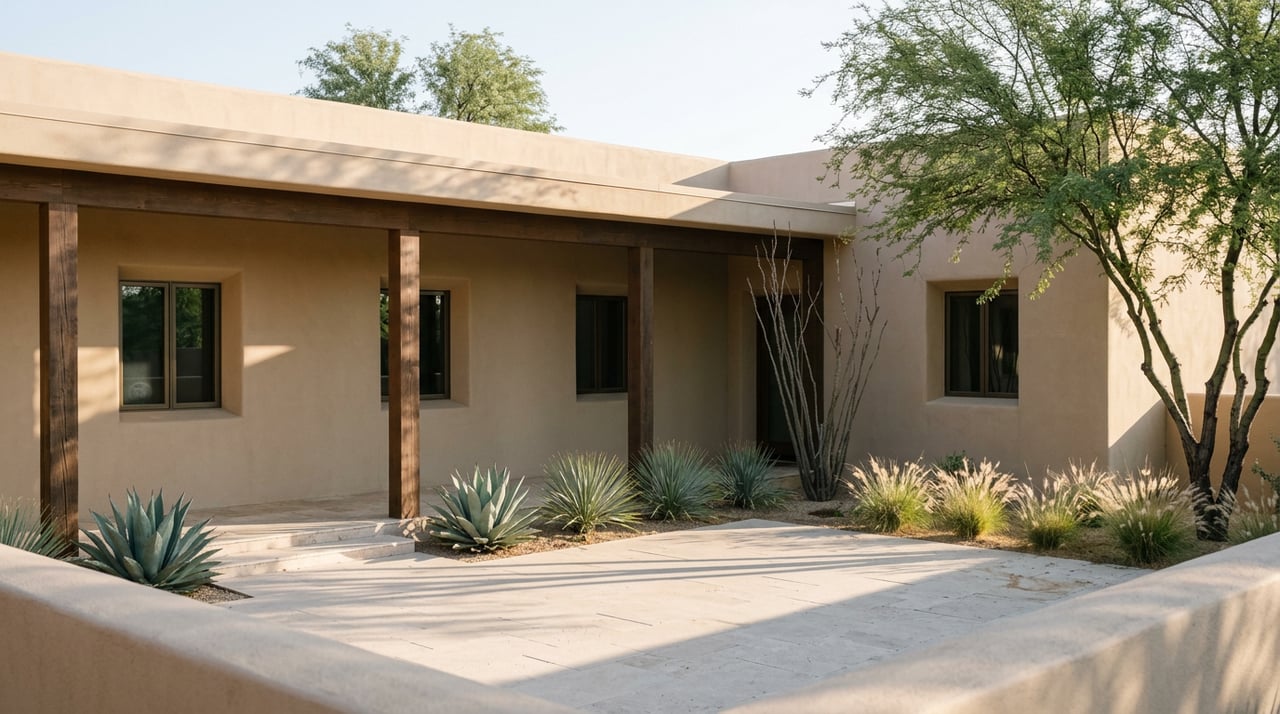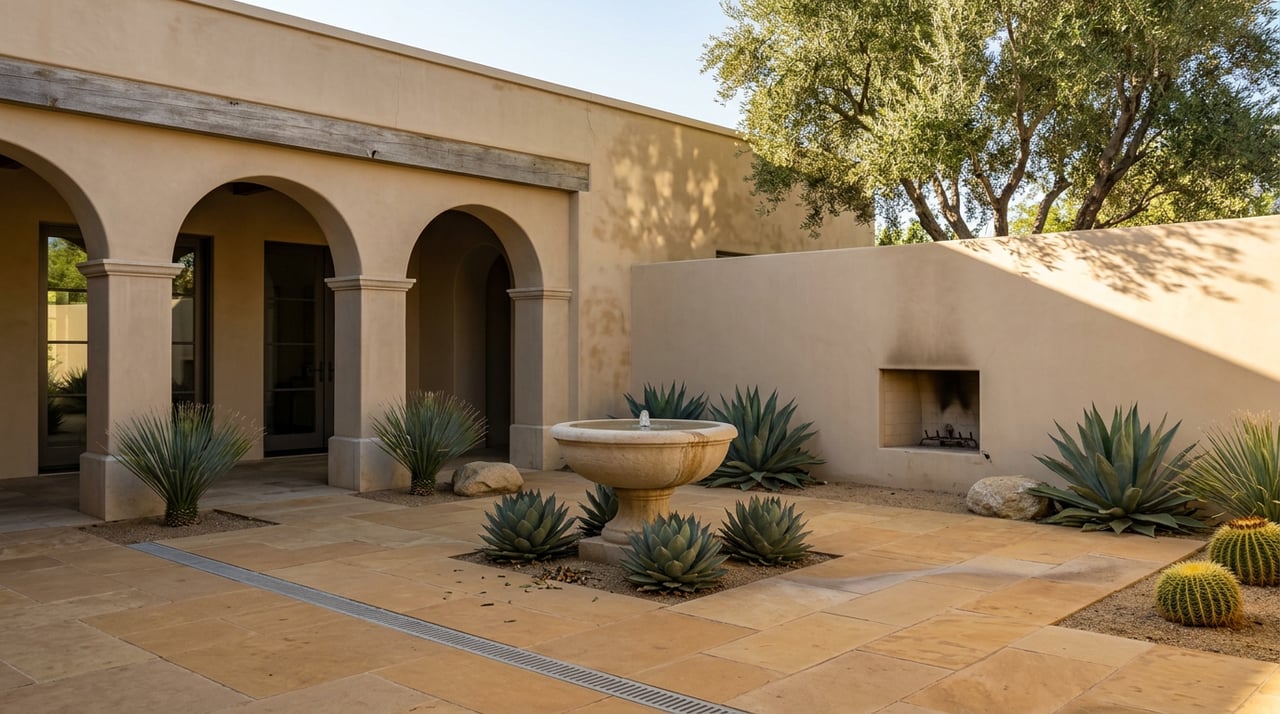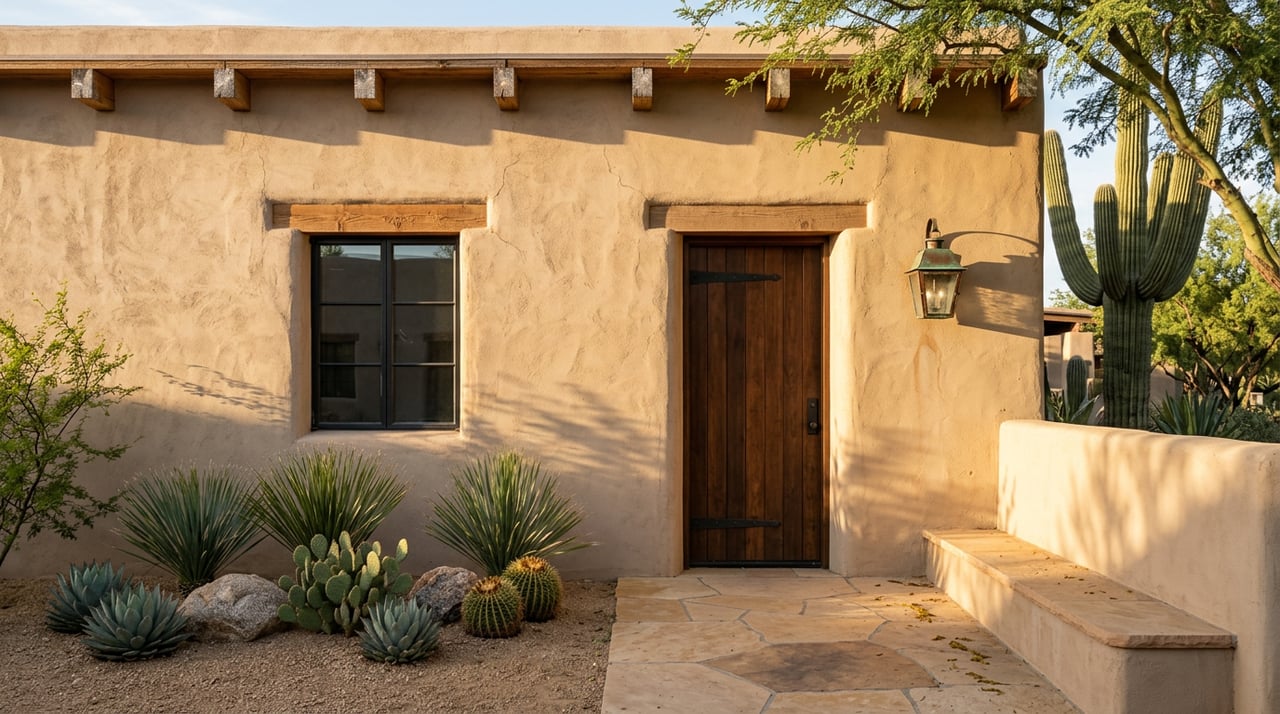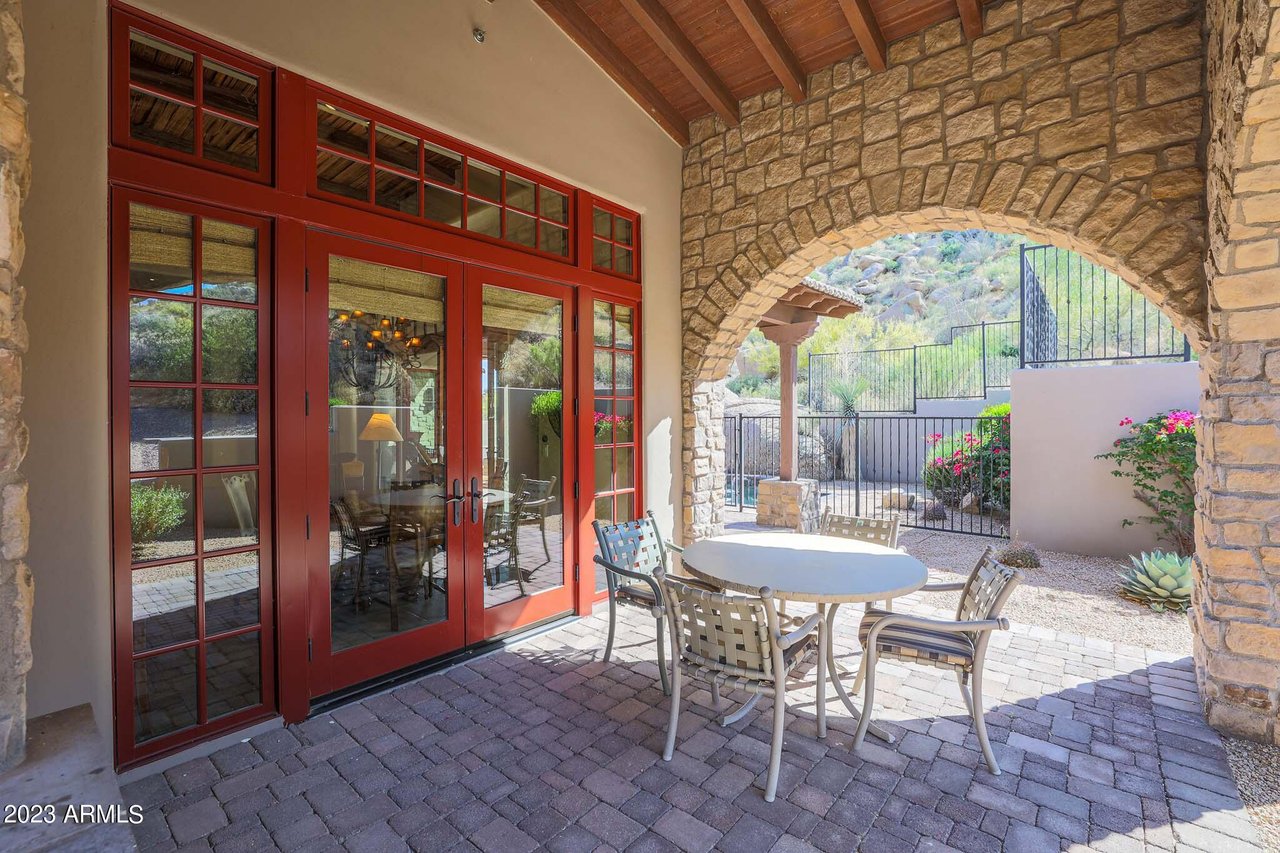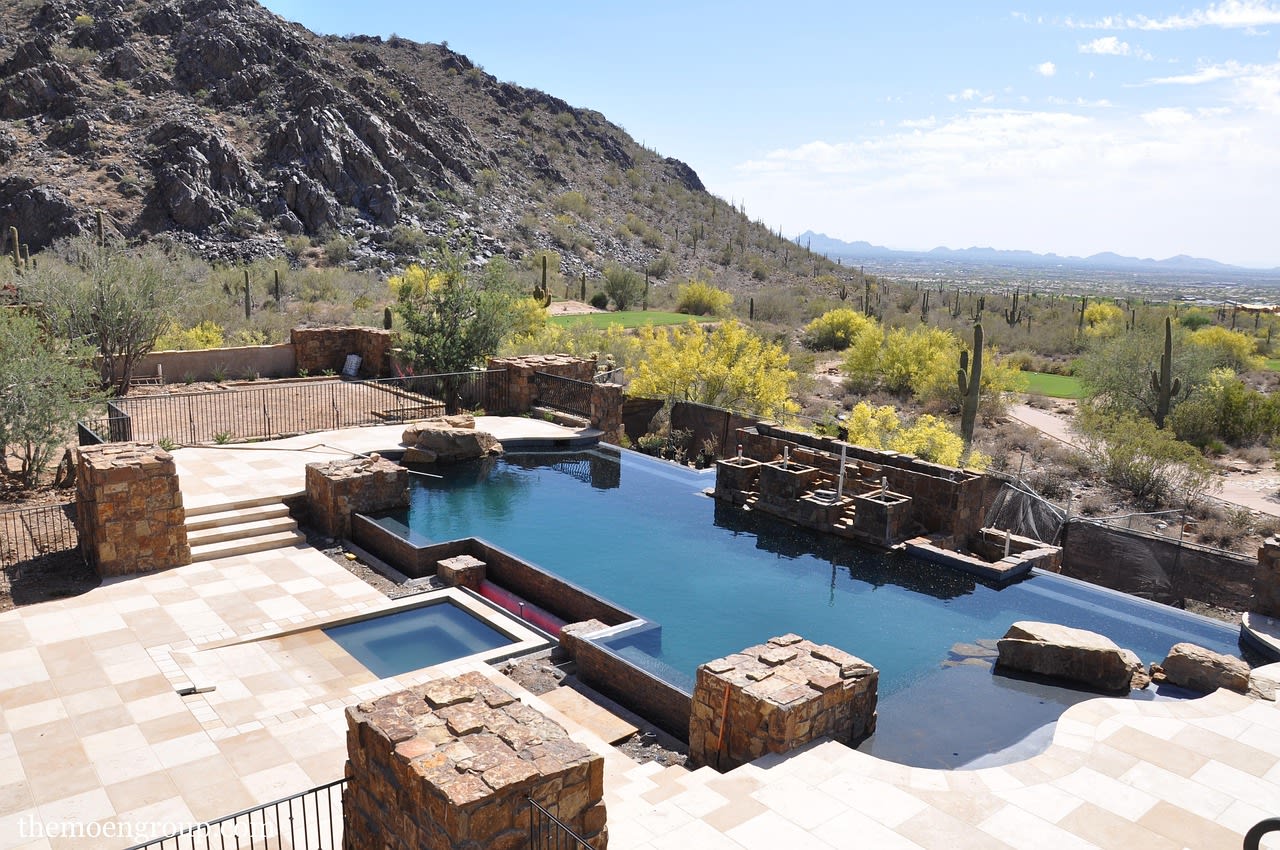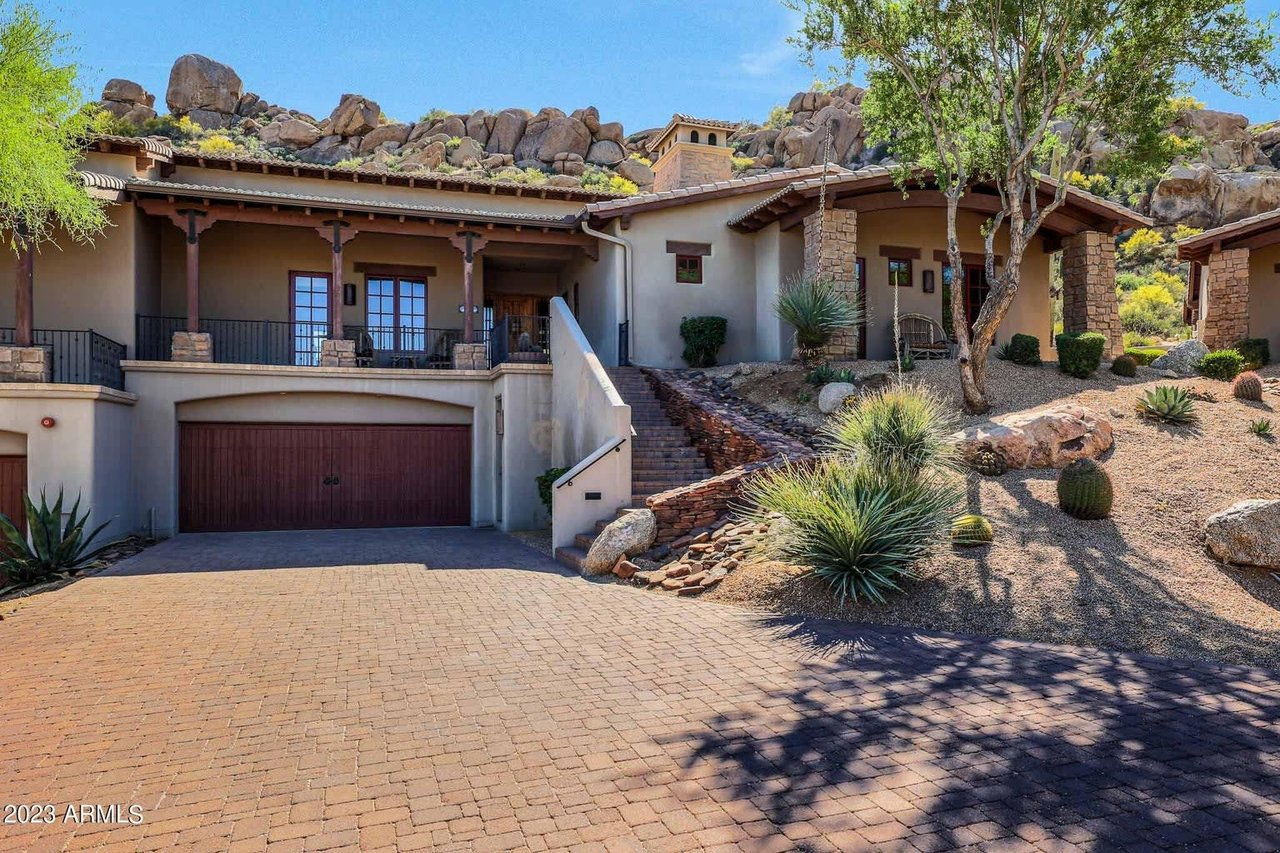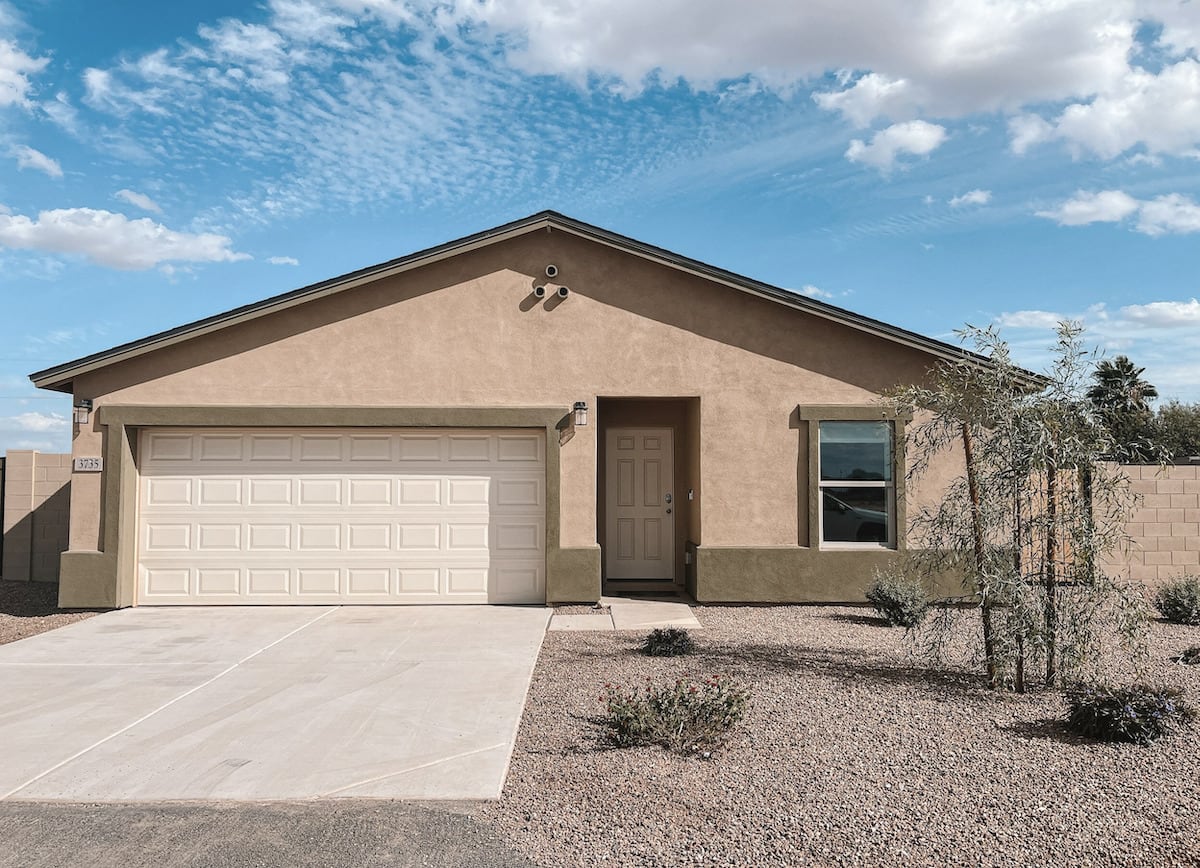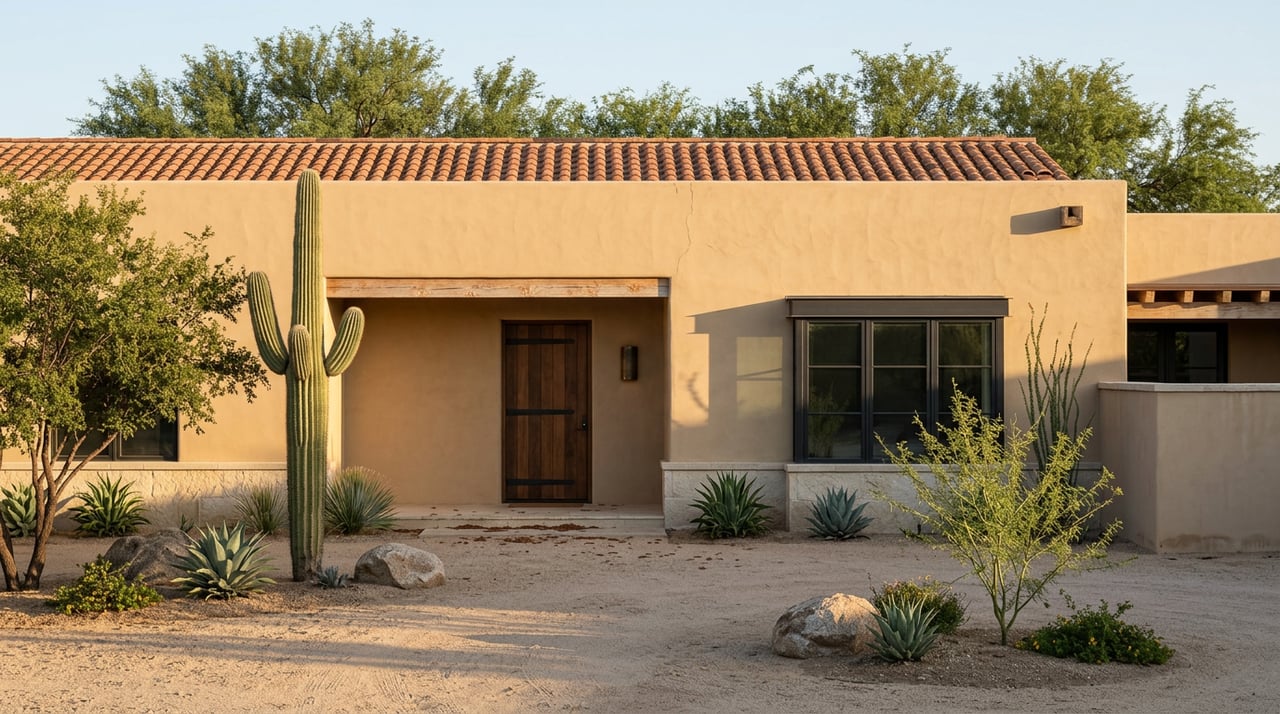
Two homes come to market in 85331 in the same week. Both are four-bedroom, both sit on view lots, both are priced within a few thousand dollars of each other. One is inside the Tatum Ranch core and connects to municipal water and sewer. The other is fifteen minutes north on two acres, and it draws its water from a well registered to a previous owner and disposes of its waste through a septic tank whose last pumping date nobody in the transaction can locate.
The price tags are twins. The diligence paths are not. In Cave Creek, the infrastructure attached to the parcel is often the story the median price refuses to tell.
The Median Hides a Fork in the Road
Headline data on Cave Creek in 2026 reads as a stable luxury market. The Zillow Home Value Index put the average Cave Creek home value at $1,057,746 as of 6/30/2026, up 1.1% over the prior year. In July 2026, the median list price was $1.12M, and homes for sale spent a median of 137 days on the market, roughly flat versus July 2025. A slower pace, a firm floor, and asking prices that sellers still hold above closed comps.
That single median obscures a bifurcation. Many properties outside the Tatum Ranch core rely on private wells and septic systems, with well age, flow rate, water quality testing, and septic condition all property-specific and requiring independent verification. The Town of Cave Creek's municipal supply draws nearly 90% of its water from the Colorado River through the Central Arizona Project, and the Town does not currently use any wells to supply town drinking water, even though many residents do use private wells.
Two homes at the same price can therefore represent two different assets. One is a house. The other is a house plus a piece of state-regulated water infrastructure and a piece of county-regulated wastewater infrastructure, each with its own paper trail, its own transfer procedure, and its own capacity to derail a closing.
The friction is the point. What follows is what actually happens between the offer and the settlement statement when the second kind of property is the one under contract.
The Septic Rule That Overrides Your Contract
Arizona is one of the states that removes buyer and seller discretion on septic inspections at the point of transfer. Any person selling or transferring a property served by an on-site wastewater treatment facility, including a conventional septic tank system or an alternative on-site wastewater treatment facility, must retain a qualified inspector to inspect the facility within six months prior to transferring ownership under Arizona Administrative Code R18-9-A316.
Two details in that rule catch out-of-state buyers who assume it operates like a standard home inspection contingency.
The requirement to have the on-site wastewater treatment facility inspected within six months prior to property transfer is a provision of Arizona rule, and takes precedence over any conflicting terms that may exist in any contract pertaining to the property transfer.
Contract language cannot waive it. The Transfer of Ownership inspection is legally required for all real estate transactions where there is an onsite wastewater treatment facility on the property, and the inspection cannot be waived for any reason.
The mechanics are straightforward once you know them. The seller retains a qualified inspector to perform the transfer of ownership inspection within six months before the date of property transfer, the inspector prepares a Report of Inspection, and the seller provides the buyer with the completed ROI form and any documents in the seller's possession relating to permitting, operation, and maintenance of the onsite wastewater system before the property is transferred. If the property does not sell within the six-month period, a new inspection is required.
Practically, that means a listing that lingers on the market past the six-month window has to pay for the inspection twice. In a submarket where days on market ran to 137 in July 2026, sellers who priced their inspection early in the listing often need to schedule a second visit before closing. Buyers should ask when the current ROI was issued and whether closing will fall inside its window.
The septic permitting authority in Cave Creek is not the Town. Permits for septic systems are issued through the Maricopa County Department of Environmental Services, and the County maintains an online search that returns the permit and inspection history on a parcel. The Online Septic Search Tool is available at no charge; formal records requests run $30 and take three to seven business days, with a $60 expedited option.
Two facts that matter during the inspection itself. Sellers should expect the septic tank lid to be removed and the tank pumped, which allows the inspector to look at the integrity of the tank, exposed rebar, damaged baffles, and signs of overuse. And concrete tanks manufactured before 1980 are prone to baffle deterioration and lid failure; disclosure of age does not automatically require replacement, but buyers may negotiate for tank replacement or a cost credit. Many older Cave Creek acreage homes fall into this category.
The 55- Number You Should Ask For Before You Write the Offer
Every legal well in Arizona has a registration number. Well registration numbers are unique identifiers beginning with "55-", followed by six digits. They function the way a VIN functions on a vehicle. Once you have the well registration number you can retrieve the imaged record for the well, which contains all the associated documents that have been submitted to the Department.
For a Cave Creek acreage property, that imaged record is a due diligence goldmine. It contains the driller's log with construction depth and casing details, historical ownership, and any pump installation reports. Buyers who ask for the 55- number in the offer package rather than after inspection tend to catch problems earlier.
Two ownership realities to plan for.
First, the well registry does not update automatically when the deed changes hands. Frequently well properties are sold or transferred without informing ADWR that there was a change in ownership; simply recording a deed of title with the county recorder does not notify ADWR, and many original property owners are still listed with ADWR as the current owner. Escrow officers will often use Form DWR 55-71A to record a transfer of well ownership with ADWR at the time of escrow closing. Asking the escrow officer up front whether they will file the 55-71A saves a paperwork loop later.
Second, exempt status shapes what the well can legally do. An exempt well is a well having a pump with a maximum capacity of not more than thirty-five gallons per minute used to withdraw groundwater pursuant to A.R.S. § 45-454. Nearly all single-family Cave Creek wells fall under this ceiling. A buyer with plans for a small guest ranch, an equestrian operation with irrigated pasture, or a second residence on the parcel should confirm the pump capacity and whether the intended use remains inside the exempt envelope.
Before writing an offer, the short list to request:
- The 55- well registration number and the ADWR imaged record
- The driller's Well Driller Report and Log, form DWR 55-55
- The most recent water quality lab results
- The most recent flow test performed by a licensed pump contractor
- If applicable, the recorded shared well agreement
- The ADEQ Report of Inspection for the septic system, dated within six months of expected close
- The Maricopa County septic permit and as-built site plan
Flow Rate, Water Quality, and the Real Cost of a "Yes"
A well that produces water is not automatically a well that serves the home. For a single-family home, a minimum of 3 to 5 gallons per minute is generally considered adequate for reliable daily use, and wells producing less than 3 GPM are not automatically disqualifying but typically require storage tanks to buffer peak demand; a licensed well pump contractor can conduct a flow test during the due diligence period to measure actual, sustained output.
Water quality is a separate question and a more consequential one for luxury buyers who assume a premium price tag implies a municipal standard. The useful distinction is between aesthetic issues and health-based issues: elevated iron or manganese will stain laundry and give water an unpleasant taste and color, an aesthetic problem with straightforward filtration solutions, while elevated arsenic, uranium, or bacteria are health-based concerns that require more robust treatment and more careful consideration.
Radon in water is an item that most standard test panels omit. Radon is not on the list of automatically checked elements in many places, and buyers should ask the person conducting the test to have the lab screen for radon; the average cost to remove radon in water is $5,000 to $6,000. That figure is small against a Cave Creek purchase price but large enough to justify pricing into an inspection credit rather than absorbing after closing.
If the test flags an exceedance, the remedy is negotiated the same way any material defect is negotiated. For health-based exceedances, buyer options typically include negotiating a seller credit or price reduction to fund installation of a certified treatment system, requiring the seller to install and certify a system as a condition of closing, or exercising the right to exit during the inspection period.
The Shared Well Agreement Nobody Enforces
Some Cave Creek acreage properties draw from a well that also serves a neighbor. That arrangement is governed by a private contract that most buyers assume the state stands behind. It does not.
Well sharing agreements are private contracts executed by private parties to govern the manner in which a well provides water to multiple properties; while Arizona water law governs how a well is to be drilled and located, it does not govern the operation or management of a well sharing agreement, and disputes regarding the terms of, or compliance with, a well sharing agreement are a purely civil matter between the parties.
Shared well agreements can sometimes be found in the well's imaged record; however, because ADWR does not regulate well share agreements nor require them to be submitted, they are rarely found in the file, and buyers should try contacting the county recorder to see if it has been recorded there.
Practically, the agreement should be pulled and read before the inspection period closes. Cost allocation for pump replacement, priority of use during low-flow months, and easement rights of access to the wellhead are the three provisions that generate disputes after closing. If the agreement is silent on any of those, that silence is negotiable while the offer is still open.
Reading the 2026 Numbers Through This Lens
Return to the two listings from the opening. Both are priced near the July 2026 Cave Creek median. One transfers with a utility bill and a sewer connection. The other transfers with a state-regulated groundwater withdrawal, a county-regulated waste system, and up to seven documents that need to be requested, read, and understood before the inspection period expires.
The Q1 picture reinforces the same split. The Q1 median sale price for houses in Cave Creek was $867,000, showing no significant change year-over-year, while Cave Creek condos gained 12.3% year-over-year to reach a Q1 median sale price of $572,000. Condos, by definition, come with pooled utilities and no septic. The luxury tail of the market, single-family acreage north and east of town, is where diligence complexity concentrates.
The 137-day median on market is not a signal of weakness. It is a signal that buyers are taking the time this market requires. Cave Creek rewards that patience.
Questions Buyers Ask Late
Can the septic inspection be waived if the buyer accepts the system "as-is"? No. The Transfer of Ownership inspection is legally required for all real estate transactions where there is an onsite wastewater treatment facility on the property, and the inspection cannot be waived for any reason. An as-is contract clause does not survive the state rule.
Does buying the property automatically transfer the well into the buyer's name at ADWR? No. Simply recording a deed of title with the county recorder does not notify ADWR that the well has changed ownership. Form DWR 55-71A must be filed separately, typically by the escrow officer at closing.
Who owns the groundwater under the parcel? Nobody, in the usual sense. The Arizona State Supreme Court has ruled that landowners do not own the groundwater beneath their property, but rather have the right to withdraw those waters. The well is the withdrawal right. The registry is where that right is documented.
Cave Creek rewards buyers and sellers who treat the property as two assets: the home above ground and the infrastructure below it. Reading both takes a slower, more attentive process than a comparable Scottsdale purchase, and it is precisely that attentiveness that protects the value of the transaction on both sides.
For a private conversation about a Cave Creek acquisition or a listing that involves well, septic, or shared infrastructure, Merritt Estates is available for a confidential consultation.